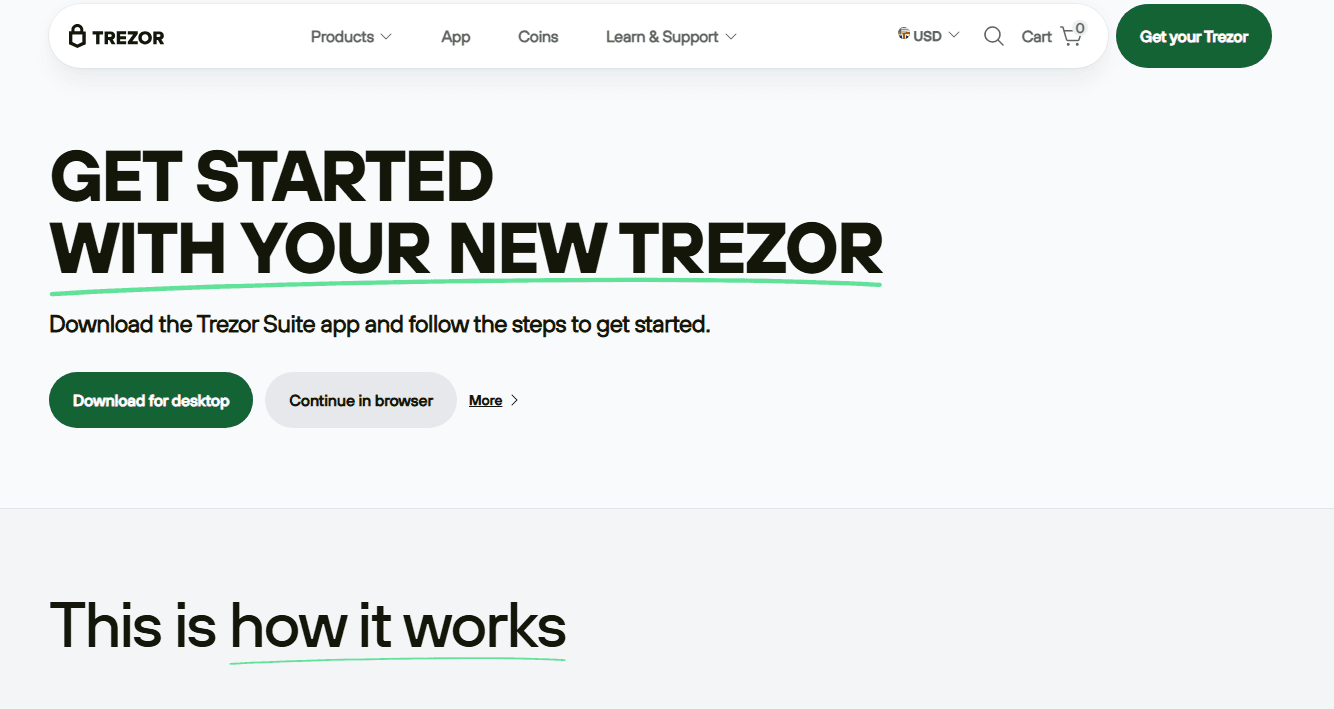
Trezor.io/Start – A Fresh 1200-Word Overview
Trezor.io/start is widely recognized as the introductory guide that helps new users become familiar with their Trezor hardware wallet. This starting point offers not just technical direction but an understanding of why hardware wallets matter in the world of digital security. Even if someone is exploring the topic out of curiosity rather than use, the concepts introduced here teach valuable cybersecurity principles relevant in many digital environments.
1. The Purpose of Trezor.io/Start
The main objective of the Trezor start guide is to help users safely transition into the world of hardware-secured digital information. It does this by combining education with step-by-step orientation, making a specialized field much easier to grasp. The start resource generally focuses on several key goals:
Explaining how a Trezor device functions
Introducing concepts like private keys and recovery phrases
Demonstrating how security measures work together
Ensuring users understand device safety before use
Rather than encouraging financial activity, Trezor.io/start teaches foundational concepts anyone can benefit from, whether they use digital currencies or simply want to learn about security technology.
2. What a Hardware Wallet Really Is
At the heart of the Trezor system is the hardware wallet itself. Unlike software wallets, which live on phones or computers, a hardware wallet is a small, dedicated physical device. Its main purpose is to secure private keys — a special type of cryptographic information used to prove ownership of digital assets.
These private keys don’t leave the hardware wallet. They stay inside the device, protected by firmware and built-in security layers. This makes the hardware wallet extremely resistant to digital threats like malware, viruses, or remote hacking attempts.
The device's physical nature plays a key role in its security. It includes a small screen and buttons so that important confirmations can be reviewed directly on the device. This design ensures the user always has physical control over key security decisions.
3. The Security Philosophy Behind Trezor
Trezor.io/start places strong emphasis on user education. It explains not only what to do with the device but why certain precautions exist. This philosophy is shaped around one major truth: digital assets are controlled by whoever holds the private keys.
This is why Trezor prioritizes the following:
A. Offline Security
Private keys remain offline, physically stored on the device. This dramatically decreases the risk of unauthorized access.
B. User Verification
The device screen shows all important operations that require approval. This prevents tricking the user through deceptive computer messages.
C. Open-Source Framework
Trezor's software is open-source, meaning the community can inspect, test, and improve the code. This transparency strengthens security and builds trust.
D. Full Control for the User
The user — not a company or server — maintains absolute control over private keys and backup information.
These principles guide every step explained at Trezor.io/start.
4. Recovery Phrase: The Master Backup
One of the most important concepts explained on the start page is the recovery phrase. This phrase, sometimes called the seed phrase, acts like a master key. Anyone who knows it can restore the wallet on another compatible device.
Trezor.io/start emphasizes several important truths regarding this phrase:
It must be written down securely and stored offline
It should never be typed into a computer or phone
It should never be shared with anyone
It must be handled with the same level of caution as valuable documents
This educational focus teaches users about the relationship between security and responsibility. The idea is simple: the recovery phrase is powerful, so it must be protected.
5. PIN Code Protection
In addition to the recovery phrase, the device encourages users to set a PIN code. The PIN acts as a barrier to protect the physical device if it is ever lost or handled by someone else.
The educational content on Trezor.io/start explains that a strong PIN helps prevent unauthorized use. It also explains how the device responds to repeated incorrect attempts, limiting access and protecting sensitive data stored inside.
These layers of protection work together:
The recovery phrase secures the wallet backup
The PIN protects the device in everyday use
Understanding how these elements work prepares users for secure interaction with the device.
6. Firmware: The Brain of the Device
Firmware is the specialized software that runs directly on a Trezor hardware wallet. Trezor.io/start helps users understand why firmware matters:
It handles security functions
It verifies device integrity
It provides the user interface displayed on the wallet
It receives periodic updates to improve safety and performance
Firmware may evolve over time as the developers add new features or strengthen defenses. This is part of responsible digital-security design, ensuring that the device remains reliable and resistant to new threats.
7. Authenticating the Device
Another topic covered in the Trezor start guide is authenticity. Counterfeit hardware is a potential security risk in any industry, so users are encouraged to understand how a genuine device should look and feel.
This education includes learning about:
Packaging indicators
Factory seals
Proper onboarding messages
Correct device behavior during initial setup
By helping users identify authentic devices, Trezor promotes safe and informed hardware usage.
8. Connecting the Device and Interface Concepts
Trezor.io/start often introduces the software interface used to interact with the hardware wallet. While the hardware wallet protects private keys, the software provides a way to view, organize, and manage accounts.
The interface usually includes:
A dashboard showing an overview of accounts
Tools for organizing various digital assets
Security settings and customization options
Backup verification features
Even without performing transactions, exploring these tools can help users learn about:
Digital identity
How accounts are structured
The concept of public and private keys
Cryptographic address systems
Understanding these elements builds a strong foundation in digital literacy.
9. Building Safe Digital Habits
Trezor.io/start doesn’t focus only on the device; it also helps users build smart habits that apply across the digital world.
Some of the key lessons include:
A. Recognizing Scams
Users learn that no legitimate service will ever ask for a recovery phrase. This rule protects against phishing attempts.
B. Avoiding Unknown Software
Installing random programs or visiting suspicious websites increases risk. The guide teaches users to trust only verified tools.
C. Verifying All Critical Actions
Because the device screen shows important confirmations, users learn to rely on the hardware for verification — not solely on a computer screen.
D. Protecting Backups
Just like important documents, the recovery phrase must be kept in a safe, private place.
These practices extend beyond digital assets and help teach overall cybersecurity awareness.
10. Why Trezor.io/Start Matters
In a world increasingly reliant on digital systems, learning about secure hardware devices is valuable knowledge. Trezor.io/start is designed not just to support device users but to educate anyone curious about how secure digital storage works.
It helps users understand:
Cryptographic systems
Private key protection
Secure device interaction
Offline security models
Risk prevention behaviors
The importance of personal responsibility
These lessons are especially important as more people encounter digital accounts, online identities, and data-driven technologies.
11. A Learning Tool Beyond Cryptocurrency
Even if someone does not plan to use digital currencies, exploring Trezor concepts at a high level helps build future-ready knowledge. Understanding hardware wallets teaches:
How secure elements function
What recovery systems look like
Why offline storage increases protection
How user verification prevents attacks
How cryptographic systems protect modern apps
These lessons apply to fields like software engineering, cybersecurity, blockchain technology, and digital identity management.
12. Final Thoughts
Trezor.io/start stands as a foundational educational experience for anyone exploring secure digital information management. It demystifies complex topics, explains why hardware-based security matters, and demonstrates how careful design can protect sensitive data. The guide emphasizes responsibility, awareness, and user empowerment — themes that remain important across all areas of digital life.