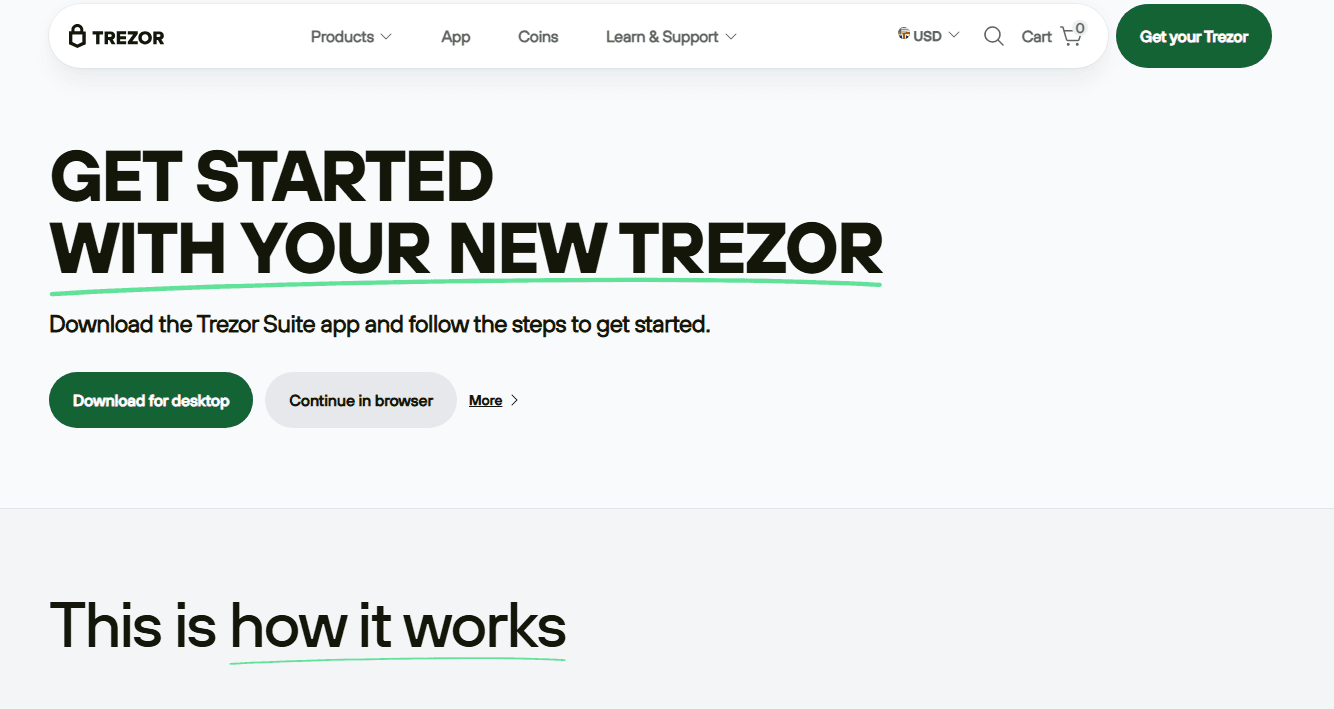
Trezor.io/Start – A Fully New 1200-Word Explanation
Trezor.io/start is widely recognized as the main place where people learn how to begin using a Trezor hardware wallet. While the page usually gives setup guidance, its most important purpose is education. It helps people understand how hardware wallets work, why they are used for protecting digital information, and what security habits are essential for long-term safety. Even for someone who is not interested in owning digital assets, the concepts explained through the Trezor startup process offer valuable cybersecurity lessons.
1. Why Trezor.io/Start Exists
The Trezor start page was designed to guide users through their first interaction with the device. Hardware wallets can seem mysterious at first because they involve cryptography, secure chips, and offline storage. Trezor.io/start breaks these ideas down into understandable parts so that anyone can learn:
What a hardware wallet is
How it keeps information safe
Why offline protection matters
What essential security features look like
How to treat sensitive information responsibly
Rather than pushing users toward financial activity, the guide provides knowledge that builds digital awareness. This makes it useful for students, beginners, tech learners, and anyone curious about modern security tools.
2. Understanding the Role of a Hardware Wallet
A hardware wallet is a small, portable device created to store sensitive information called private keys. These keys are what give people access to digital assets on a blockchain. Since these assets are not physical objects and do not live on any single computer, protection focuses entirely on securing the keys that represent ownership.
On a regular computer or phone, private keys can be exposed to:
Malware
Remote hacking attempts
Screen-reading software
Weak passwords
Unsafe apps or extensions
A hardware wallet avoids these risks by keeping the keys inside the device at all times. They are never copied to a computer or the internet. Even when the device is plugged in, the private keys remain isolated in a secure environment. The hardware wallet simply signs authorized actions internally, without revealing the keys to external systems.
This separation between the device and the outside world is a core principle taught on Trezor.io/start.
3. Learning the Security Principles Behind Trezor
The Trezor start guide is not just about using the device — it’s about understanding digital protection. Several key principles are introduced early on:
A. Offline Key Storage
This concept explains how keeping keys offline dramatically reduces exposure to online attacks.
B. User Verification Through Device Screens
The device includes a physical screen so that the user can confirm important actions. Even if a computer is compromised, the device shows the real details.
C. Transparency Through Open Source
Trezor’s software is open for public review. This encourages accountability and continuous improvement.
D. Personal Responsibility
The user is in full control of their backup phrase, PIN, and device. No one else manages these components.
Understanding these principles helps new learners appreciate why hardware wallets are considered one of the strongest security methods in the digital asset world.
4. The Recovery Phrase Explained
One of the most important ideas taught at Trezor.io/start is the recovery phrase. This is usually a list of words generated by the device during initial setup. It acts as the ultimate backup.
The concept can be compared to a master password — except much more sensitive.
Trezor.io/start emphasizes several critical truths:
The phrase must be stored offline.
It should never be typed into computers or apps.
It must never be shared with anyone.
It should be protected like a valuable document.
If a device is lost or damaged, the recovery phrase allows the user to rebuild their wallet. This is why Trezor places so much emphasis on learning how to protect it securely.
By understanding this, users gain awareness of how powerful yet vulnerable personal digital information can be, even outside cryptocurrency.
5. The Importance of the PIN Code
Another important concept introduced on the start page is the PIN code. This number protects the device itself. If someone physically obtains a Trezor, the PIN acts as a layer of defense.
Trezor’s design intentionally slows down attempts to guess the PIN, which prevents unauthorized access. The idea demonstrates how hardware-based security combines digital cryptography with practical physical safety.
6. Firmware and Device Authenticity
Trezor.io/start also introduces users to the idea of firmware — the specialized software installed directly on the hardware wallet. Firmware controls how the device operates, verifies security rules, and manages the screen interface.
The guide teaches:
Why firmware needs to be trustworthy
Why updates sometimes occur
How secure firmware contributes to safe device usage
How authentic devices differ from counterfeit ones
The topic of authenticity is especially important. When learning about secure hardware, users are taught to recognize genuine packaging, proper startup messages, and trusted device behavior. These lessons help build critical thinking skills related to verifying technology.
7. Exploring the Software Interface
While the hardware wallet protects private keys, the software interface gives users a way to view and organize information. Trezor.io/start usually introduces the idea of connecting the device to an official application, which acts as a dashboard.
This dashboard may include:
A general overview of different accounts
Tools for organizing digital assets
Security configuration options
Backup verification features
Even when not performing transactions, learning how these tools work teaches important concepts, such as:
How public addresses function
The difference between viewing information and storing sensitive data
Why confirmations must happen on the device rather than the computer
How digital accounts can be structured independently of physical devices
For someone exploring computer science or cybersecurity, these ideas are especially valuable.
8. Developing Safe Online Behavior
A major focus of Trezor.io/start is helping users build habits that protect them from threats in the digital world. These habits are not exclusive to hardware wallets — they apply to online life in general.
Some examples include:
A. Recognizing Phishing Attempts
Users learn that no official service will ever ask for the recovery phrase. Understanding this rule helps them recognize scams everywhere online.
B. Being Careful With Downloads
The guide emphasizes installing only genuine software. This concept applies to all areas of computing.
C. Verifying Before Approving
The hardware wallet reinforces the practice of double-checking information before making any important decision.
D. Keeping Backups Safe
Protecting sensitive documents teaches responsibility and awareness of personal data security.
These practices are essential in a world where online threats target people of all ages.
9. Long-Term Digital Security Awareness
Trezor.io/start also helps users build a mindset for long-term digital safety. For example:
Understanding that secure devices require proper handling
Learning that no technology is safe without good habits
Recognizing that backup management is part of digital organization
Knowing that security is a continuous process, not a one-time task
These lessons are increasingly important as people rely more on digital identities, online accounts, and cloud-based information.
10. Educational Value Beyond Cryptocurrency
Even if someone never uses a hardware wallet, the principles explained on Trezor.io/start give useful knowledge about:
Cryptography
Secure hardware design
Offline data protection
Human-computer interaction
Backup systems
Authentication methods
Risk management
These topics are foundational in modern cybersecurity, information technology, and emerging digital systems.
11. Final Thoughts
Trezor.io/start serves far more than a setup page. It is an introduction to the world of secure digital storage and responsible information management. By teaching users about recovery phrases, PIN codes, authenticity checks, and offline protection, it promotes strong, lifelong digital habits.
The knowledge gained from exploring these concepts applies across many areas — from protecting personal accounts to understanding how secure systems are built. The focus is empowerment, awareness, and safe digital behavior.