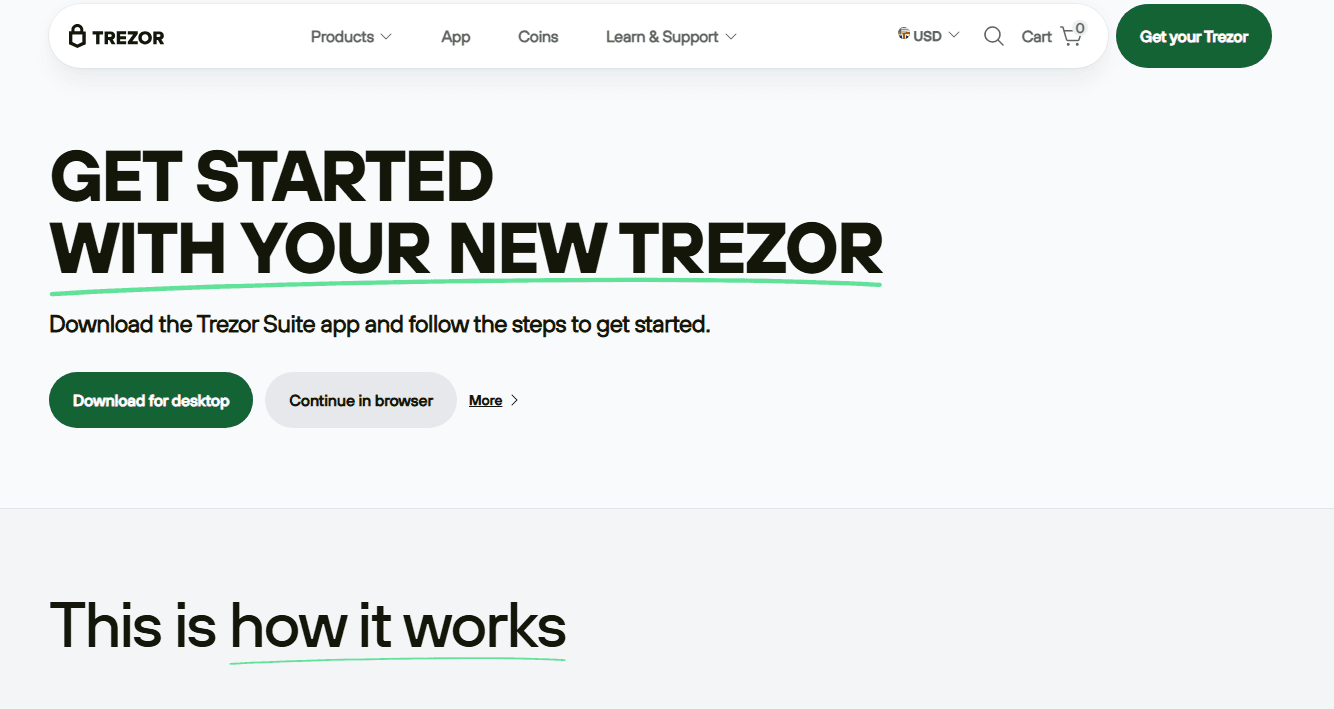
Trezor.io/Start: A Comprehensive 1200-Word Guide
Trezor.io/start is widely known as the entry point where users learn how to begin using a Trezor hardware wallet safely. Instead of being just a webpage, it acts as a full orientation space—guiding people through setup, security education, and best practices for managing digital assets. Even if you are not planning to trade or invest, understanding how hardware wallets work can help you build strong cybersecurity habits and understand the mechanics of modern digital technologies.
Trezor hardware wallets were created to provide a safer, offline-first way to store cryptocurrency. Unlike applications that run directly on a computer or smartphone, a hardware wallet is a physical device designed to isolate the most sensitive information—like secret keys—from potential threats on the internet. The purpose of trezor.io/start is to make this process approachable, clear, and understandable, no matter how familiar someone is with digital security.
1. What Trezor.io/Start Represents
When people visit the Trezor start page, they usually expect detailed instructions for activating their device. But the main idea behind this guide is education. It ensures that users understand why certain steps exist and what they protect them from. The page typically outlines three foundational goals:
Helping users get familiar with their Trezor device
This includes understanding its buttons, display, firmware, and core functions.Teaching essential security concepts
Hardware wallets rely on seed phrases, PINs, and firmware verification to ensure security. Trezor.io/start helps users build confidence in these concepts before using them.Preparing users for long-term safe management of digital assets
Beyond initial setup, the guidance includes information about backups, recovery, and safe device handling.
2. Introducing the Hardware Wallet Concept
Before a user even reaches the technical steps, Trezor.io/start emphasizes the purpose of using a hardware wallet. The central idea is that digital currencies exist only as information recorded on their respective networks. What proves ownership is not a specific file or application, but a cryptographic key. These keys must remain private, and whoever controls them effectively controls the assets they correspond to.
A standard software wallet keeps these keys on a computer or mobile device. While convenient, those environments are exposed to risks such as malware, phishing, and unauthorized access. A hardware wallet, on the other hand, stores these keys within a secure, offline chip. This makes it extremely difficult for attackers to reach them.
This is why Trezor devices include a small screen and physical buttons—they allow the user to verify important actions directly on the device. Even if a computer is compromised, the private keys remain safe inside the hardware wallet as long as proper security habits are followed.
3. Understanding Device Security
At trezor.io/start, a significant portion of the educational content revolves around protecting the wallet and its recovery tools. The most important concepts include:
Seed Phrase
A seed phrase (sometimes called a recovery phrase) is a sequence of words that acts as the master backup for the hardware wallet. Anyone who has this phrase can recreate the wallet on another device. Because of this sensitivity, Trezor.io/start stresses that:
It must be written down physically, not stored on a computer or phone.
It should not be photographed or shared.
It should be kept somewhere protected from others and from damage.
This approach reminds users that their security depends largely on their personal habits.
PIN Code
A PIN protects the device itself. Even if it were lost or stolen, the PIN prevents unauthorized access. Trezor encourages users to pick a code that is memorable yet unpredictable.
Passphrase Option
For those who want additional security, a passphrase can create an extra layer of protection. It acts like an extra word that the user invents. This is optional, and Trezor.io/start explains it for educational purposes only.
4. Firmware and Authenticity Checks
Trezor devices rely on open-source firmware, which is software that runs on the hardware wallet. The start page teaches users why firmware updates exist: they fix issues, add features, and enhance security. Understanding this helps people recognize that updating firmware is not a casual action but an important part of maintaining a secure device.
Additionally, authenticating the device ensures that it is genuine and not tampered with. Trezor.io/start often guides users to inspect packaging, holograms, and factory seals. This protects users from counterfeit hardware, which could compromise security before the device is even used.
5. Connecting to the Software Interface
Although this guide will not provide actual setup steps or instructions for making transactions, it is helpful to understand the educational purpose of connecting the hardware wallet to official software. The software acts as a dashboard where users can view balances, organize assets, and adjust settings. However, the core security still resides in the hardware device itself.
Trezor.io/start introduces this concept so users understand the division of responsibility:
The software displays information.
The hardware wallet protects private keys.
The user verifies critical actions on the device screen.
This separation ensures that even if a computer encounters issues, the wallet remains secure as long as the user carefully reviews actions on their Trezor device.
6. Learning Safe Digital Habits
Beyond hardware setup, the Trezor start page emphasizes long-term security practices. These include:
Avoiding Suspicious Software
Users learn to trust only verified tools and avoid downloading unknown or unofficial programs. This practice applies to all digital activities, not just cryptocurrency.
Recognizing Phishing Attempts
One of the most common ways attackers target users is by impersonating official websites or support teams. The guidance encourages users to:
Double-check website names.
Ignore unsolicited messages requesting private information.
Understand that true support channels will never ask for seed phrases or PINs.
These ideas can help young users learn how to stay safe online more broadly.
Keeping Backups Safe
The Trezor start resources encourage people to treat their backup phrase like high-value information. This teaches responsibility regarding sensitive data and helps users build habits that apply to all cybersecurity scenarios.
7. Exploring Features and Tools (Educational Overview)
After explaining the core security principles, Trezor.io/start provides high-level information about the features included with Trezor devices:
Portfolio View
The software interface usually includes a simple portfolio overview where people can monitor various digital assets. This is purely informational and does not require any financial activity to understand.
Account Organization
The interface allows users to view different types of accounts, track balances, and manage addresses. Understanding how digital addresses function helps users learn about cryptographic systems and digital identity.
Security Settings
Users can explore optional settings such as enabling passphrases, configuring device display preferences, and customizing connection options. Learning how these work helps users appreciate the flexibility and depth of hardware-based security.
8. Why the Start Page Matters
The purpose of trezor.io/start is not only to introduce a device but to build a mindset. It teaches users that:
Cybersecurity is an active responsibility.
Backups matter more than the device.
Verifying everything protects against mistakes.
Offline storage is one of the strongest defenses against digital threats.
Good habits prevent risks more effectively than any tool.
For someone new to technology, these principles form a strong foundation for understanding digital safety in general.
9. Viewing Trezor as a Learning Tool
Even without handling digital assets, learning how Trezor works can be beneficial. It exposes users to:
Cryptography
Secure hardware design
Human-computer interaction
Risk management
Personal data protection
The philosophy of “not your keys, not your assets”
These are valuable concepts for anyone interested in cybersecurity, software development, or emerging financial technologies.
10. Final Thoughts
Trezor.io/start serves as a gateway into a world where digital responsibility and strong security practices come together. It is built not just to help users activate a device, but to provide a clear understanding of concepts like private keys, seed phrases, secure interfaces, and threat awareness. By focusing on education, the page empowers users to manage digital information safely and confidently.